OUR YOUTUBE CHANNEL
MX-5 Rust Protection & Underbody Treatment
Protecting Your MX-5 the Right Way
Every Mazda MX-5, from the earliest NA to the latest ND, is vulnerable to corrosion. With many now well over 30 years old, proper rust prevention has become essential if you want to preserve your car for the long term.
At The MX-5 Restorer, we understand these cars better than anyone. Through years of carrying out structural rust repairs, we’ve learned exactly where, why, and how MX-5s rust. That experience allows us to deliver a protection process that is both targeted and effective — without unnecessary work or gimmicks.
The Truth About the Original Underseal
A common question we’re asked is:
“Do you remove all of the original factory underseal before applying new coatings?”
The short answer is no, and there’s a very good reason why.
The Factory Coating Still Works
Mazda’s original underseal is a non-porous bituminous coating designed to protect the steel from water and road contaminants. Where it remains properly bonded to the metal, it still performs exactly as intended — even decades later.
There’s a widespread misconception that old underseal “soaks up” moisture or allows rust to form behind it. This simply isn’t true. The material is not porous; corrosion can only start where the coating has failed — such as around panel edges, drain holes, or areas that have been damaged or worn thin over time.
When we inspect the underside of an MX-5, the difference is easy to see:
- Healthy underseal appears smooth, solid, and firmly attached.
- Failing underseal looks flaked, cracked, or peeling, often with rust visible around the edges.
Moisture can only enter through those visible failure points — not through the intact underseal itself.
Why We Don’t Strip It All Off
Completely removing the original underseal is an extremely time-consuming and invasive process that offers no benefit if the existing coating is sound. In fact, doing so can expose clean, protected metal unnecessarily, introducing risk rather than reducing it.
Our philosophy is simple:
If it’s still doing its job, leave it alone. If it’s failed, fix it properly.
By retaining good factory material and restoring only the areas that need it, we maintain the strongest, most consistent protection possible — combining Mazda’s original work with modern materials and techniques.
How We Treat Areas of Failing Underseal
When we locate failed or damaged underseal, we deal with it thoroughly and correctly:
- Identify the Extent of Failure – Each section is inspected under bright light to determine how far the failure has spread.
- Remove Damaged Material – We carefully remove all loose or flaking underseal back to clean, sound material or bare metal.
- Expose and Clean the Steel – Any exposed steel is cleaned to bright metal using mechanical tools to remove all loose corrosion.
- Rust Conversion – We apply a premium rust converter that chemically transforms remaining rust into a stable compound and leaves a tough polymer film for continued protection.
- Zinc Priming – A high zinc-content primer is applied for extra electrochemical protection.
- Seam Sealing – Fresh seam sealer is used where necessary to seal joints and prevent moisture ingress.
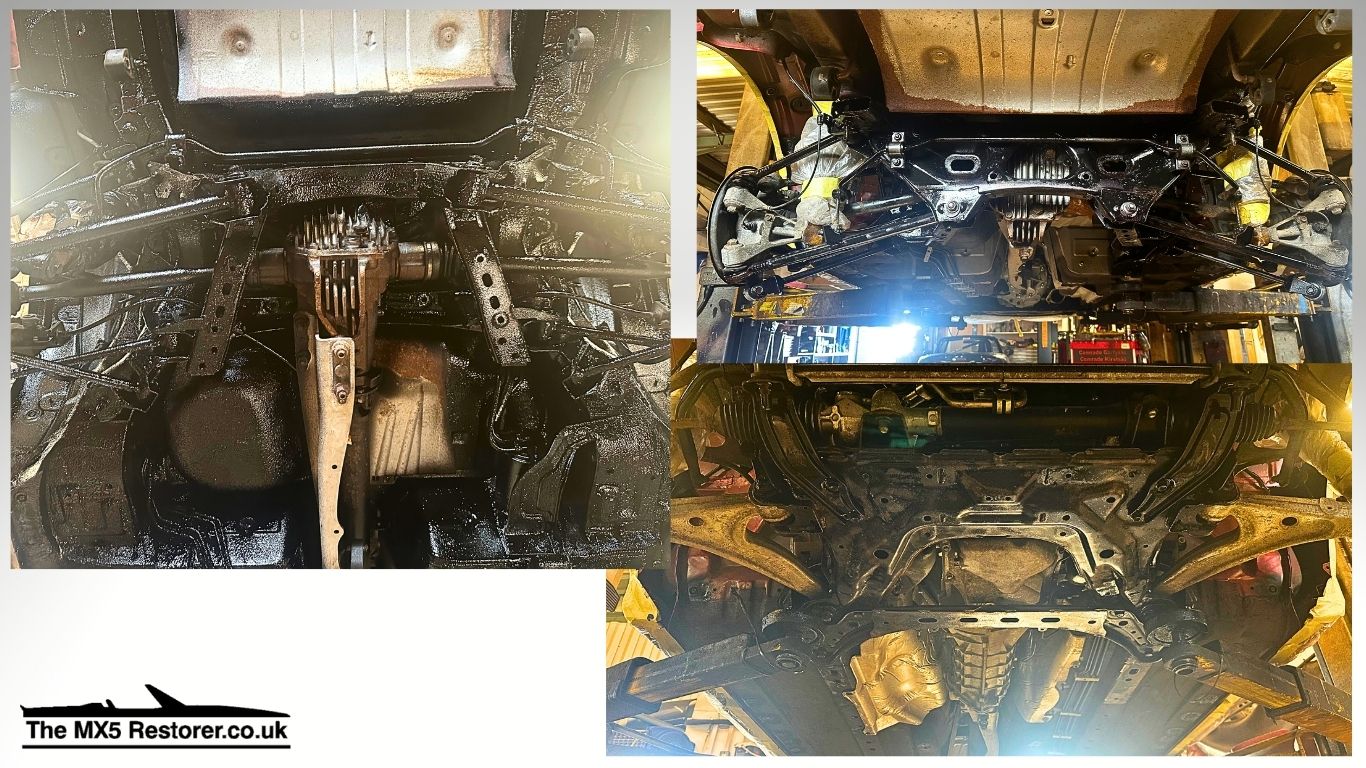
- Underseal Application – The new underseal is then applied, bonding to both the original coating and any newly prepared metal to form a single continuous protective layer.
This method ensures that corrosion cannot continue or spread, while preserving original factory protection where it remains effective.
Our Complete Rust Prevention Process
Stage 1 – Lift & Preparation
We raise the car on our ramp and remove road wheels, arch liners, undertrays, and braces to expose every area needing inspection.
Stage 2 – Full Assessment
The underside is thoroughly inspected to confirm suitability for rust prevention (cars with advanced corrosion may first require welding or repair).
Stage 3 – Cleaning & Surface Preparation
We spend a full day cleaning the underside — removing old dirt, road grime, and any failed underseal using mechanical tools and degreasers.
Stage 4 – Rust Conversion
Any surface rust is treated with our professional-grade rust converter, including on subframes, suspension arms, and arch areas.
Stage 5 – Component Cleaning
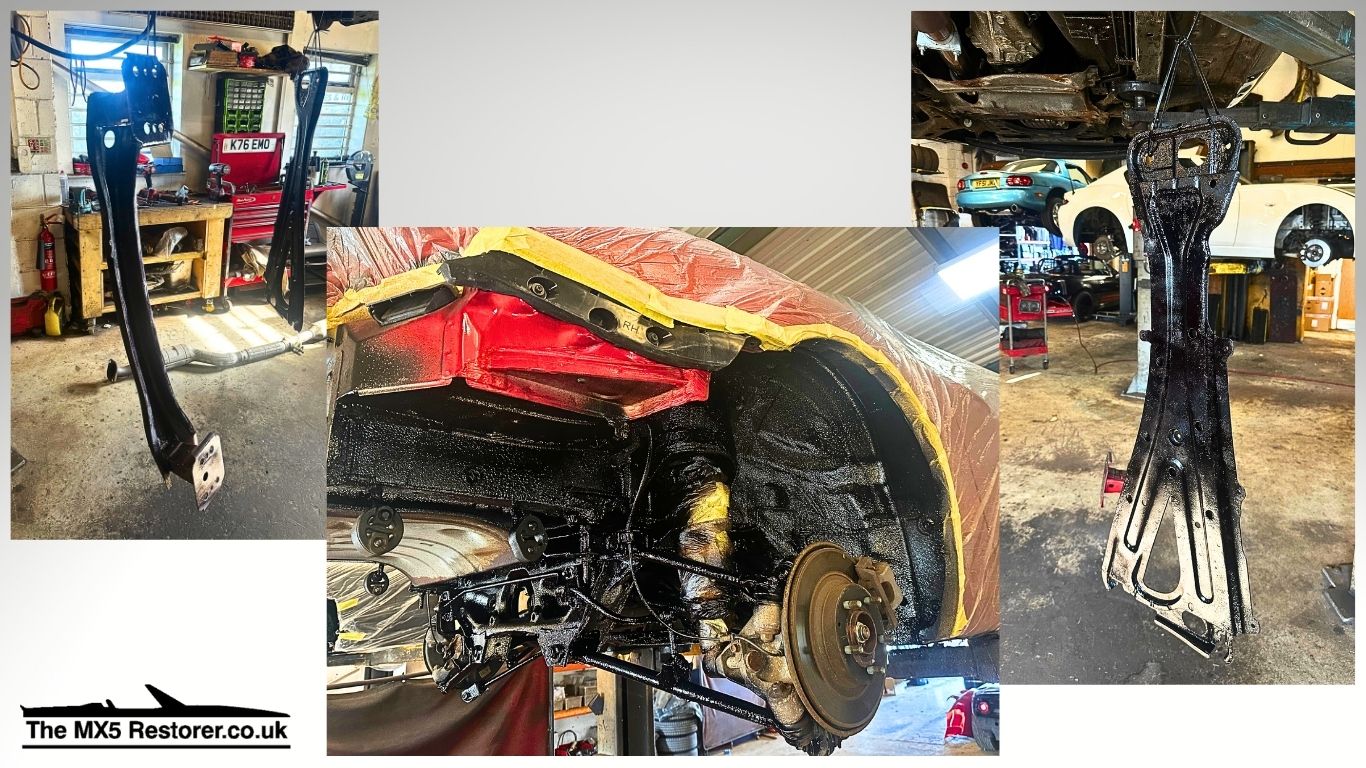
All removed parts are cleaned, treated, and primed separately for maximum coverage.
Stage 6 – Zinc Priming & Seam Sealing
Zinc primer is applied to treated areas, followed by fresh seam sealer to protect all joins and edges.
Stage 7 – Masking
Sensitive components (exhausts, brakes, fuel lines, etc.) are masked off to ensure clean application.
Stage 8 – Underseal Application
A flexible, high-quality underseal is applied to the underbody, arches, subframes, and other components, creating a robust, impact-resistant finish.
Stage 9 – Cavity Wax Injection
All enclosed cavities — including sills, chassis rails, and rear inner arches — are injected with a high-performance wax using a flexible lance for complete internal coverage.
Stage 10 – Drying, Reassembly & Final Checks
After curing, all parts are refitted, the car is cleaned, and every component is checked, including wheel torques and underbody coverage.
Pricing
Our underbody protection process is a comprehensive, three-day service including full preparation, materials, labour, and VAT.
| Model | Price | Notes |
|---|---|---|
| Mk1 (NA) | £900 | Includes all materials, labour, and VAT |
| Mk2 (NB) | £900 | Includes all materials, labour, and VAT |
| Mk3 (NC) | £800 | Standard service without rear bumper removal |
| Mk3 (NC) | £1000 | With rear bumper removal for additional protection access |
| Mk4 (ND) | £800 | Includes all materials, labour, and VAT |
All options include cavity wax injection into sills and box sections as standard.
We normally require the car for a minimum of three full working days, although a Saturday-to-Saturday booking allows for ideal drying and curing times, especially if the car arrives wet.
What About Newer Cars?
Even newer MX-5s can benefit from professional rust prevention. The factory coatings provide only limited coverage in certain areas — particularly around seams, box sections, and suspension components. Over time, water and road salt can still find their way into these vulnerable points.
By applying protection early, before any corrosion has the chance to start, you’ll dramatically extend the life of the car’s structure and avoid the need for future welding repairs. For ND models and low-mileage NCs, this is the ideal time to protect your investment and preserve the car’s value for years to come.
For newer or exceptionally clean cars, we also offer a clear underseal coating. This delivers the same high-quality protection as our standard product but with a transparent finish, allowing you to see and monitor the condition of the original metalwork and factory coatings underneath. It’s the perfect choice for owners who want full protection without changing the appearance of the underside.
Our process is tailored to each model and condition, so newer cars receive the same thorough, professional treatment — focused on long-term prevention rather than repair.